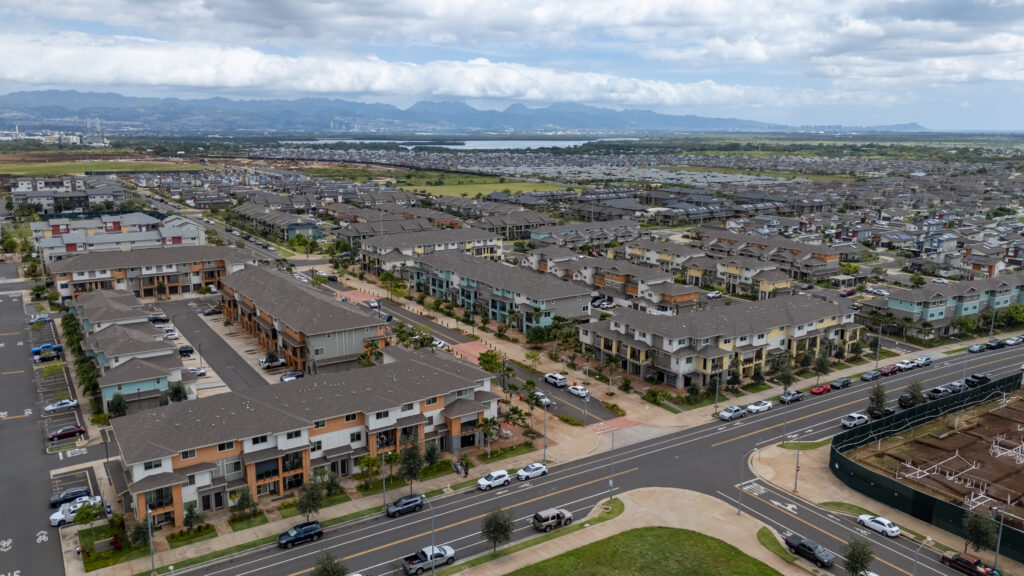
Hawaii’s affordable housing lotteries give income-qualified local families a path to below-market new homes — but availability changes fast. As of July 6, 2026, the only active purchase lottery on Oʻahu is Keʻolu at Koa Ridge (income-qualified townhomes, current phase $550s–$640s, 120% AMI cap). This guide explains how the lottery system works, the 2026 income limits, and how to be ready when the next window opens.
Ho‘opili pricing note — October 8, 2026: Uluwehi advertises from $487,960; its 11 priced homes span $487,960–$629,460. Advertised community entries are not promises of a particular bedroom count, FLEX® layout or available home. Other communities and historical comparisons retain their own stated dates. See the dated Ho‘opili pricing guide for the separate advertised and listed-home figures.
Lottery Quick Facts (July 2026)
- Active purchase lotteries on Oʻahu: 1 — Keʻolu at Koa Ridge (phased releases)
- Keʻolu pricing: $550s–$640s current phase (1–3 BR townhomes)
- Income cap: 120% AMI — $184,800 for a family of four (2026 HHFDC, effective May 1, 2026)
- Recently closed programs: Kuilei Place (85%+ sold), Ulana Ward Village (completed 2025), Kahuina initial lottery (Jan 2026)
- Pre-Qualification Required: Yes
- Last Updated: July 6, 2026
Oʻahu Affordable Housing Lottery Status (July 2026)
Rather than publish speculative dates, here is the verified status of every income-qualified purchase program on Oʻahu. New windows are announced with as little as 30 days’ notice — see “How to Stay Updated” below.
| Program | Location | Pricing | Income Cap | Status (Jul 2026) |
|---|---|---|---|---|
| Keʻolu at Koa Ridge | Central Oʻahu (Waipiʻo) | $550s–$640s (current phase) | 120% AMI | ACTIVE — phased lottery releases |
| Kuilei Place | Moʻiliʻili | $370,600–$813,300 (original) | Program tiers varied | Lottery closed — 85%+ sold, completion is estimated for early 2028 (July 21 developer update) |
| Kahuina (Māmalu/Lamakū) | Kakaʻako | $600Ks–$800Ks (HHFDC units) | 100–140% AMI | Initial lottery held Jan 2026 — contact Stanford Carr for remaining availability |
| Ulana Ward Village | Kakaʻako | $271K–$717K (original) | HCDA reserved housing | Completed 2025 — resale with restrictions only |
| Hoʻopili | ʻEwa Beach | Market-rate from $487,960 | — | No active income-restricted lottery |
Verified July 6, 2026. Subscribe to HHFDC’s email list and individual developer alerts to receive lottery announcements as they’re confirmed.
2026 Income Limits by AMI Category
Hawaii affordable housing lotteries set eligibility based on Area Median Income (AMI). The figures below are from the HHFDC Honolulu income schedule effective May 1, 2026 (HUD median family income $133,400; the 100% program limit for a family of four is $154,000). Values marked ~ are derived from the published caps — confirm the official full table with HHFDC or the project administrator.
| Household Size | 100% AMI | 120% AMI | 140% AMI |
|---|---|---|---|
| 1 Person | ~$107,800 | $129,360 | ~$150,920 |
| 2 People | ~$123,200 | ~$147,840 | ~$172,480 |
| 4 People | $154,000 | $184,800 | ~$215,600 |
| 8 People | ~$203,300 | $243,960 | ~$284,620 |
Your total household income includes wages, bonuses, self-employment income, Social Security, pensions, alimony, and certain investment income. Some lotteries allow you to exclude childcare costs or medical expenses when calculating qualifying income—check the specific lottery rules.
How to Prepare for Hawaii Affordable Housing Lotteries
Winning an affordable housing lottery in Hawaii requires preparation before the application window opens. Follow these steps to maximize your chances.
Step 1: Get Pre-Qualified with a Lender (60–90 Days Before)
Most lotteries require mortgage pre-qualification letters dated within 90 days of your application. Contact a Hawaii lender who works with affordable housing programs and provide:
- 2 years of tax returns
- 2 months of pay stubs (all household income earners)
- 2 months of bank statements (all accounts)
- Credit authorization form
- Government-issued ID
Lenders familiar with HHFDC and HCDA programs include Bank of Hawaii, First Hawaiian Bank, and Central Pacific Bank. Ask specifically about affordable housing pre-qualification—standard pre-approvals may not meet lottery requirements.
Step 2: Calculate Your Qualifying Income
Add up gross income (before taxes) from all household members 18 and older who will live in the unit. Include:
- Wages and salaries
- Self-employment income (net profit after business expenses)
- Social Security and disability payments
- Pension and retirement account distributions
- Alimony and child support received
- VA benefits
- Rental income from other properties
Do not include: one-time bonuses (unless recurring), loans, or gifts. Some programs allow income exclusions for full-time students over 18 or dependents with disabilities—verify with the specific lottery administrator.
Step 3: Gather Required Documentation
Standard lottery applications require:
- Mortgage pre-qualification letter (90-day validity)
- Government-issued photo ID for all household members 18+
- Social Security cards for all household members
- Proof of income: 2 years tax returns + 2 months pay stubs
- Bank statements (2 months, all accounts including checking, savings, retirement)
- Birth certificates for dependents under 18
- Marriage certificate (if applicable)
- Divorce decree (if applicable, showing alimony/child support)
Keep digital copies organized by household member. Some lotteries accept online applications with uploaded documents; others require mailed physical copies.
Step 4: Submit Your Application During the Window
Application windows typically run 30–45 days. Submit early to avoid last-minute technical issues, but know that submission timing does not affect your lottery number—all applications received within the window have equal odds.
You can apply to multiple lotteries simultaneously as long as you meet each development’s specific income requirements. There is no penalty for entering multiple lotteries.
Step 5: Wait for the Lottery Drawing
Drawings typically occur 2–4 weeks after the application window closes. Developers notify all applicants of their lottery number via email and/or mail. If you’re selected (usually top 200–300 numbers for a development with 100 units), you’ll move to the verification phase.
Affordable Housing Development Options in 2026
Keʻolu at Koa Ridge — the Active Program
Keʻolu is Castle & Cooke’s income-qualified townhome neighborhood inside Koa Ridge in Central Oʻahu — and as of July 2026, the only place on the island running an active affordable purchase lottery. The current phase offers 1–3 bedroom townhomes (565–896 sq ft) priced in the $550s–$640s; Phase 1 (July 2025) started at $477,500. Buyers must earn no more than 120% AMI ($184,800 for a family of four), occupy the home for 10 years, and accept a city right-of-first-refusal on early resales. HOA runs $260–$285/month total. Releases are phased — join Castle & Cooke’s interest list to be notified.
Kahuina at Our Kakaʻako — Initial Lottery Held
Kahuina, Stanford Carr Development’s two-tower project at 450 Cooke Street, includes 396 HHFDC affordable-sale units (Māmalu and Lamakū towers) alongside market-rate residences. HHFDC unit pricing at the January 2026 presale ran from the $600,000s (1BR) to the $800,000s (3BR). The initial lottery window has passed — contact the sales team about remaining or returned inventory.
Kuilei Place — Closed
Kuilei Place in Moʻiliʻili allocated 603 of 1,005 units as affordable (original pricing $370,600–$813,300). The lottery closed, the project is 85%+ sold, and construction is underway while completion is estimated for early 2028 (July 21 developer update). Watch for occasional returned units offered through HHFDC.
HCDA Reserved Housing — Kakaʻako
The Hawaii Community Development Authority (HCDA) requires reserved housing in Kakaʻako projects; Ulana Ward Village (completed 2025, original pricing $271K–$717K) was the most recent large release and is now resale-only under its restrictions. Future Kakaʻako towers will carry reserved-housing components — check HCDA’s site for announcements. HCDA programs have strict income verification and prioritize Hawaiʻi residents.
Tips for Increasing Your Lottery Success
Apply to Every Lottery You Qualify For
There is no limit on how many lotteries you can enter. If you qualify for multiple developments’ income tiers, apply to all of them. Lottery odds vary by development (some have 10 applicants per unit, others 30+), so casting a wide net improves your chances.
Get Pre-Qualified Early
Pre-qualification letters expire after 90 days. If you get pre-qualified in January for a March lottery, you may need to renew it for a May lottery. However, starting the mortgage process early signals to lottery administrators that you’re a serious buyer, and some prioritize applicants who demonstrate financial readiness.
Understand AMI Category Strategy
If your household income falls near the top of one AMI category (e.g., 79% AMI), consider whether delaying a lottery entry until your income increases slightly might open access to a higher AMI tier with more units available. For example, Hoʻopili’s 100–140% AMI categories often have larger unit inventories than 80–100% AMI.
However, don’t manipulate income artificially—lottery applications require tax returns and pay stubs that must reflect genuine earnings.
Prepare for the Verification Phase
If your lottery number is called, you typically have 30–45 days to complete full income and asset verification. This includes updated pay stubs, bank statements, and a formal mortgage application. Being organized during this phase prevents delays that could cost you the unit.
What to Expect After Winning a Lottery
Winning a lottery number does not guarantee you a home—it guarantees you the right to proceed through verification and unit selection. Here’s the typical timeline:
- Lottery Drawing: You receive your lottery number (e.g., #47 out of 2,400 applicants)
- Verification Invitation: If you’re in the top tier (usually top 200–300 for a 100-unit development), you’re invited to submit full documentation
- Income & Asset Verification (30–45 days): Administrator reviews your updated financial documents to confirm AMI eligibility
- Unit Selection: If verified, you select from available units in order of your lottery number
- Purchase Agreement: You sign a purchase contract and begin the mortgage approval process
- Closing (60–90 days): You close on the home, subject to mortgage approval and any construction completion delays
If your lottery number is below the top tier (e.g., #450 for a 100-unit development), you remain on the waitlist. As people ahead of you drop out (failed verification, changed plans, mortgage denial), your number may be called. Waitlist activity can continue for 12–18 months after the initial lottery.
Frequently Asked Questions
Can I enter multiple affordable housing lotteries at the same time?
Yes, you can apply to as many lotteries as you qualify for, with no penalty or limit. Each lottery is independent — when multiple programs are open, you can enter them all. However, if you win multiple lotteries, you can only purchase one affordable housing unit—you’ll need to choose which development to proceed with and withdraw from the others.
What happens if I don’t win the lottery?
If your lottery number is not selected in the initial round, you remain on the waitlist. As applicants ahead of you drop out (due to mortgage denial, changed plans, or failed income verification), your number may be called. Waitlists can remain active for 12–24 months. You can also apply to future lotteries at the same development or other affordable housing lotteries opening throughout the year—many buyers win on their second or third attempt.
Do I need to be a first-time homebuyer to qualify for affordable housing lotteries?
No, most Hawaii affordable housing lotteries do not require first-time buyer status. HHFDC and HCDA programs prioritize income eligibility and Hawaii residency (typically 1 year minimum) over homeownership history. However, if you currently own property, you must either sell it before closing on the affordable unit or demonstrate that you meet the program’s asset limits (which vary by development). Some lotteries allow you to own one other property if it’s your primary residence and you’re downsizing, but this is program-specific—always verify with the lottery administrator.
How long does my pre-qualification letter remain valid for affordable housing lotteries?
Most lotteries require pre-qualification letters dated within 90 days of your application submission. If you get pre-qualified in January for a March lottery but then want to apply to a May lottery, you may need to renew it. Some lenders issue 120-day letters, but verify the specific lottery’s requirements. During the verification phase (if your number is called), you’ll need to convert your pre-qualification into a full mortgage pre-approval with updated documentation, which typically takes 2–3 weeks.
Can military families get priority in Hawaii affordable housing lotteries?
Some HCDA reserved housing lotteries include preference points for military families, and certain developments allocate a percentage of units for active duty or veteran households. However, most private developer lotteries (Hoʻopili, Kaulu, Kuilei Place) do not provide military preference—all qualified applicants have equal lottery odds. Military families should verify whether the specific lottery offers veteran priority. Additionally, VA loans are accepted by most affordable housing programs, which can provide favorable financing terms (0% down, no PMI) that improve purchasing power within AMI limits.
What counts as household income for affordable housing lottery eligibility?
Household income includes all gross income (before taxes) from everyone 18 and older who will live in the unit. This includes wages, salaries, bonuses, self-employment net profit, Social Security, disability, pensions, alimony, child support, VA benefits, and rental income from other properties. It excludes one-time gifts, loans, and certain student financial aid. Some programs allow income exclusions for full-time students over 18 or dependents with disabilities. Income is verified using 2 years of tax returns and 2 months of current pay stubs for all earners.
How are affordable housing lottery winners selected?
Winners are selected through a random number generator administered by the developer or a third-party lottery service. All applications submitted within the application window receive a random number, regardless of submission order. For example, if 2,400 people apply for 100 units, the computer generates random numbers 1–2,400. Applicants with numbers 1–100 are invited to proceed to verification; numbers 101–300 (approximately) become the primary waitlist. The lottery drawing typically occurs 2–4 weeks after the application window closes, and all applicants are notified of their number via email or mail.
Are there resale restrictions on Hawaii affordable housing units?
Yes, most HHFDC and HCDA affordable housing units have 10-year to 30-year resale restrictions limiting how much you can sell the home for. For example, HHFDC programs often cap resale appreciation at 1% per year, meaning if you buy a $500,000 home and sell it 5 years later, you can only sell it for approximately $525,000 (plus approved capital improvements). These restrictions ensure the units remain affordable for future buyers. Some developments allow you to sell at market rate after the restriction period ends. Check the specific program’s deed restriction terms before purchasing—these are disclosed during the purchase agreement phase.
How to Stay Updated on New Lottery Openings
Lottery announcements often happen with short notice—sometimes only 30 days before the application window opens. To avoid missing opportunities:
- Subscribe to HHFDC’s email list for state-administered lotteries
- Check HCDA’s official reserved housing information and the relevant project’s notices for current application details.
- Follow the developers: D.R. Horton Hawaiʻi (Hoʻopili), Gentry Homes (Kaʻulu), Castle & Cooke (Koa Ridge/Keʻolu), Stanford Carr (Kahuina)
- Check our lottery calendar for the latest verified windows
- Join Hawaii affordable housing Facebook groups where members share lottery announcements
If you need help navigating the lottery process or want guidance on which developments to prioritize, our guide to buying new construction in Hawaii covers mortgage pre-qualification strategies, timeline expectations, and common pitfalls.
Is Affordable Housing the Right Path for You?
Affordable housing lotteries offer substantial savings—units are typically priced 20–40% below market rate for comparable new construction. However, the trade-offs include:
- Lottery odds: Some lotteries have 10–30 applicants per unit, meaning your odds can be as low as 3–10%
- Location constraints: The active program (Keʻolu) is in Central Oʻahu; recent urban programs (Kahuina, Kuilei Place) sold out quickly
- Resale restrictions: Limited appreciation for 10–30 years reduces your investment upside compared to market-rate homes
- Timeline uncertainty: From lottery entry to closing can take 6–12 months, and construction delays may push move-in dates further
For families who qualify and prioritize homeownership stability over short-term investment returns, affordable housing lotteries are often the only path to owning new construction in Hawaii. For others, exploring market-rate new construction developments or resale homes may offer more flexibility.
Next Steps
If you’re ready to enter the 2026 lottery pipeline:
- Contact a Hawaii lender this week to start pre-qualification
- Calculate your household AMI percentage to identify which lotteries you qualify for
- Subscribe to HHFDC and HCDA email lists to receive lottery announcements
- Check our lottery calendar and this page for updated windows
- Apply to every lottery you qualify for—there’s no downside to entering multiple
Questions about specific developments or need help determining your AMI eligibility? Review the detailed pages for Keʻolu, Koa Ridge, and Kuilei Place for floor plans, pricing, and neighborhood specifics — and see our step-by-step lottery guide.
Your next step
Make sense of your options.
Have a question about a community or a floor plan? Team Wong can help you work through the details.
Ask Team Wong