ʻAhakea update — September 29, 2026: Detached GenHomes are the first phase; the second phase adds townhomes and attached FLEX homes. Older detached prices below are historical, not current offers. Confirm pricing and availability by home type. Compare the two phases.
Ho‘opili pricing note — October 8, 2026: Uluwehi advertises from $487,960; its 11 priced homes span $487,960–$629,460. Advertised community entries are not promises of a particular bedroom count, FLEX® layout or available home. Other communities and historical comparisons retain their own stated dates. See the dated Ho‘opili pricing guide for the separate advertised and listed-home figures.
TL;DR: Buying new construction in Hawaii is fundamentally different from buying resale. You’ll deal with lotteries, first-come-first-served releases, developer-controlled timelines, CPR structures, and promotional financing that can save you tens of thousands of dollars. This guide walks you through the entire process — from getting prequalified to closing day — with specific advice for Oahu’s active developments including Ho’opili, Koa Ridge, Ward Village, and more. Whether you’re a first-time buyer, military family, or investor, this is everything you need to know about buying a brand-new home in Hawaii in 2026.
Quick Facts — New Construction in Hawaii (2026)
| Active Major Developments | Ho’opili, Koa Ridge, Ward Village, Ka’ulu, Kuilei Place, and more |
| Price Range | $300K (affordable/restricted) to $5M+ (luxury condos) |
| Market-Rate Entry Point | Compare dated advertised entries and actual available-home quotes in the Hoʻopili pricing guide. |
| Sales Method | First-come first-served (most); lottery (some affordable units) |
| Typical Deposit | $5,000–$50,000+ depending on development |
| Common Ownership Structure | Fee simple CPR (Condominium Property Regime) |
| Rail Impact | Skyline operational East Kapolei to Middle Street (Segment 2 opened Oct 2025); Ho’opili has its own open station |
Last Updated: July 6, 2026
Step 1: Understand the Hawaii New Construction Landscape
Before you start shopping for a new construction home in Hawaii, you need to understand what makes this market unique. Hawaii isn’t like the mainland — land is scarce, building costs are among the highest in the nation, and demand consistently outstrips supply.
What’s Being Built on Oahu in 2026
Oahu’s new construction activity is concentrated in three main areas:
- West Oahu (Ewa Beach / Kapolei): Ho’opili by D.R. Horton (~11,750 homes at buildout), Ka’ulu by Gentry, and Hoakalei’s luxury Kekainani phase — Gentry’s Makamae and NorthPark are sold out as of 2026
- Central Oahu (Waipio): Koa Ridge by Castle & Cooke (~3,500 homes at buildout)
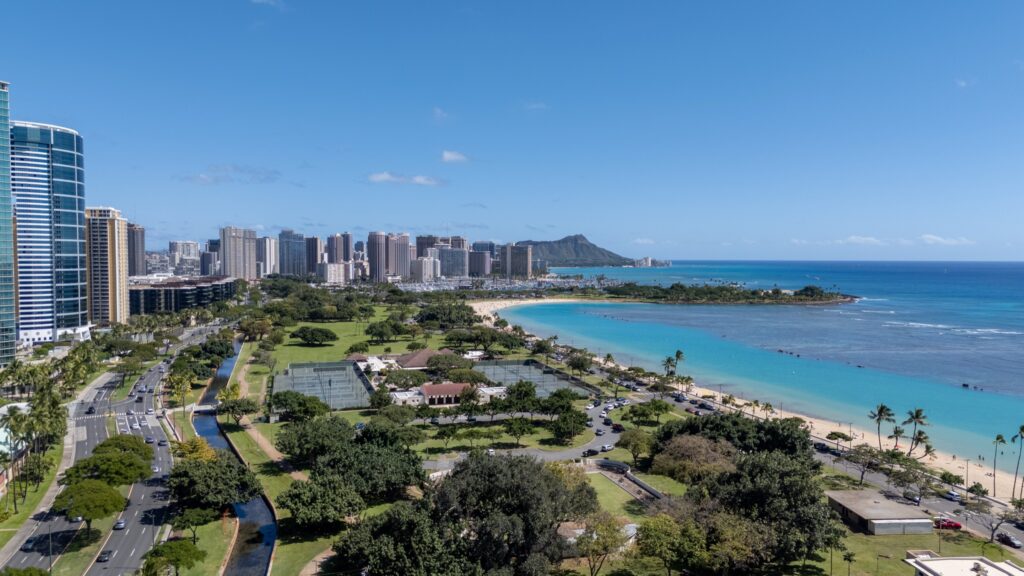
- Urban Honolulu: Ward Village by Howard Hughes (14+ towers), Kuilei Place, The Park at Keeaumoku, and various Kakaako condos
Each area offers different price points, lifestyles, and commute profiles. West Oahu is the most affordable with rail access. Central Oahu offers a suburban feel with excellent schools. Urban Honolulu delivers walkable luxury living at premium prices.
Fee Simple vs. Leasehold
Most new construction in Hawaii is fee simple — you own the home and the land beneath it outright. This is the preferred ownership structure. Some older properties (and a few newer ones) are leasehold, meaning you lease the land from a landowner and pay a monthly lease rent. Avoid leasehold if possible — it complicates financing, resale, and long-term value.
CPR (Condominium Property Regime) Explained
Many “single-family” homes in Hawaii new construction are technically condominiums under the state’s CPR structure. This is not what you think of as a “condo” — your home may be a fully detached standalone house with a garage and yard. The CPR structure simply means the property is governed by a homeowners association with shared common areas and maintenance responsibilities.
What CPR means for you:
- You pay monthly HOA fees (typically $67–$350/mo depending on community)
- Exterior modifications require HOA approval
- Common areas are professionally maintained
- You own your home and land fee simple
- VA and conventional financing are available (with some restrictions)
Step 2: Get Your Finances in Order
New construction purchases in Hawaii move fast. Homes at popular developments like Ho’opili sell out within days of each release. You need to be financially ready before homes are announced — not after.
Get Prequalified (Not Just Pre-Approved)
Most developers require a prequalification letter (or pre-approval) from a lender before you can reserve a home. At Ho’opili, for example, you must submit a prequal letter and a $5,000 deposit check to the sales office to hold a home.
Pro tip: Get prequalified with the developer’s affiliated lender AND an independent lender. D.R. Horton’s DHI Mortgage and Castle & Cooke’s preferred lenders often offer promotional rates — but you want a backup option and the ability to compare.
Down Payment Requirements
| Loan Type | Typical Down Payment | Notes |
|---|---|---|
| Conventional | 3–20% | PMI required below 20% |
| FHA | 3.5% | Lower credit score OK; property must be FHA-approved |
| VA | 0% | Military only; property must be VA-approved |
| USDA | 0% | Rural areas only; limited availability on Oahu |
Hawaii-specific consideration: Condo-regime neighborhoods can go through periods where conventional, FHA, or VA loan eligibility is limited by project-approval status. Always confirm the specific project’s loan eligibility with your lender before committing.
Developer Financing Incentives
This is where new construction really shines. Developers frequently offer financing incentives through their affiliated lenders that can save you thousands:
- D.R. Horton / DHI Mortgage: Promotional rates as low as 4.99% (vs. ~6.5-7% market rates) plus up to $5,000–$6,000 in closing cost credits
- Castle & Cooke: Periodic partnerships with American Savings Bank for competitive rates and closing cost assistance
- Howard Hughes (Ward Village): Various financing incentives for pre-sale purchases
A 1% rate reduction on a $700K mortgage saves approximately $400/month — or nearly $5,000/year. Over a 30-year loan, that’s $144,000 in savings. Developer financing incentives are one of the biggest advantages of buying new construction.
Step 3: Choose Your Development & Neighborhood
Once your finances are ready, it’s time to choose where to buy. Consider these factors:
Budget (pricing as of July 2026, per developer price lists)
| Budget Range | Best Options |
|---|---|
| Under $400K | Kohina at Ho’opili (affordable/income-restricted), Malina at Koa Ridge (affordable) |
| Under $500K | Uluwehi condos at Ho’opili (from $487,960), Lau Leʻa studios at Koa Ridge (from the $380s) |
| $500K–$700K | Alana townhomes at Ho’opili (from $556,480), Kāpili condos (from $654,945), Keʻolu at Koa Ridge (income-qualified, $550s–$640s) Availability unconfirmed. October 11 status update. |
| $700K–$1M | Ka’ulu townhomes ($714,600–$794,850), ʻAhakea detached GenHomes at Ho’opili (from $763,240 (historical detached quote, Aug. 2026)), Walea II at Koa Ridge (from the $790s), Nanahea SFR at Ho’opili (from $925,990), Ka’ulu single-family ($959,900–$987,800) |
| $1M–$1.7M | Nanea III at Koa Ridge ($1.34M–$1.63M), Ward Village 1-bedrooms |
| $1.5M+ | Ward Village condos, premium Koa Ridge homes |
Commute
- Work in Kapolei/Ewa/Pearl Harbor? → Ho’opili
- Work at Schofield Barracks? → Koa Ridge
- Work in downtown Honolulu? → Ho’opili (rail) or Ward Village (walkable)
- Work remotely? → Koa Ridge for quiet suburban feel, or Ward Village for urban amenities
Lifestyle Priorities
- Best schools: Koa Ridge (Mililani school complex)
- Rail transit: Ho’opili (2 Skyline stations)
- Urban walkability: Ward Village
- Budget comparison: Use the dated Hoʻopili pricing guide; an advertised starting price is not an available-home quote.
- Largest homes: Noho Papa at Ho’opili (up to 2,000 SF) or Nanea at Koa Ridge (up to 2,228 SF)
Step 4: The Buying Process
How New Homes Are Sold in Hawaii
Unlike the mainland, where you might browse model homes and choose a lot, Hawaii new construction sales work differently:
First-Come, First-Served (Most Common in 2026):
- Developer announces a release (typically 5–20 homes)
- Interested buyers submit prequalification letters and deposit checks to the sales office
- Homes are assigned on a first-come basis
- You typically have 3–7 days to sign a purchase agreement
Lottery (Less Common Now, Still Used for Affordable Units):
- Developer announces a lottery for a specific phase
- Interested buyers register and submit required documentation
- Winners are drawn randomly and offered the opportunity to purchase
- If a winner declines, the offer moves to the next name
Prior to 2023, Ho’opili used lotteries extensively. Today, most Ho’opili homes sell first-come first-served; lottery systems remain in use for income-restricted affordable housing releases — as of July 2026, Keʻolu at Koa Ridge is the only active affordable lottery program on Oʻahu.
What to Expect at the Sales Office
When you visit a new construction sales office in Hawaii, bring:
- Prequalification letter from your lender
- $5,000+ deposit check (cashier’s check or certified funds)
- Valid photo ID
- Your real estate agent (if using one — recommended)
Important: Some developments allow buyer’s agents; others don’t. At Ho’opili, you can use your own buyer’s agent, but they may need to be registered with the sales office before your first visit. At Ward Village, the process is different. Always confirm agent policies before your visit.
The Purchase Agreement
New construction purchase agreements in Hawaii are typically developer-drafted contracts — not the standard Hawaii Association of Realtors forms used in resale transactions. Key things to watch for:
- Completion timeline: When will your home be ready? What happens if it’s delayed?
- Upgrade costs: What’s included in the base price vs. what’s extra?
- Deposit terms: Is your deposit refundable? Under what conditions?
- Assignment clause: Can you assign (transfer) the contract before closing?
- Financing contingency: What happens if your loan falls through?
Strongly recommended: Have a Hawaii real estate attorney review the purchase agreement before signing. The $500–$1,000 legal fee is worth it for a purchase this significant.
Step 5: Construction Period & Closing
What Happens After You Sign
For homes that are already built or near completion (common at Ho’opili), closing can happen within 30–60 days. For pre-sale purchases (common at Ward Village), the timeline can be 1–3+ years.
During the construction period:
- Your deposit is held in escrow — not given directly to the developer
- You may be invited to select finishes — flooring, countertop colors, etc.
- Lock your interest rate strategically — work with your lender to time your rate lock
- Stay in communication — the developer’s sales team will provide construction updates
Final Walk-Through
Before closing, you’ll do a final walk-through of your completed home. This is your chance to identify any defects, missing features, or items that need attention before you take ownership. Bring a checklist and don’t rush it. Common items to check:
- All appliances function properly
- HVAC (split AC) works in every room
- No cosmetic damage (scratches, dents, paint issues)
- Doors and windows open/close properly
- Plumbing works (run every faucet, flush every toilet)
- Smart home features are operational
- Garage door opener works
Closing Day
Hawaii real estate closings are handled through an escrow company (not an attorney-led closing like some mainland states). You’ll sign documents, wire your down payment and closing costs, and receive your keys. Title insurance is standard and recommended.
Step 6: After You Move In
Warranty Coverage
New construction homes in Hawaii typically come with:
- 1-year builder warranty: Covers defects in materials and workmanship
- 2-year systems warranty: Covers HVAC, plumbing, and electrical systems
- 10-year structural warranty: Covers major structural defects
Document everything. If you notice issues during the first year, report them to the builder immediately — in writing. Keep records of all warranty claims and communications.
HOA Orientation
As a new homeowner in a CPR community, you’ll receive HOA documents including CC&Rs (Covenants, Conditions & Restrictions), house rules, and the annual budget. Read them. Key things to understand:
- What exterior modifications are allowed (satellite dishes, landscaping changes, paint colors)
- Pet policies
- Rental restrictions (if you plan to rent your home later)
- Parking rules
- Assessment schedule and reserve fund status
Special Considerations for Military Buyers
Hawaii is home to multiple military installations, and service members are among the most active new construction buyers. Key considerations:
- VA loan eligibility: Not all new construction phases are VA-approved. Confirm before committing. Ho’opili is generally VA-approved; Koa Ridge approval varies by phase.
- BAH alignment: 2026 Oahu BAH rates range from ~$2,400/mo (E-5 with dependents) to $4,000+ for senior officers. This supports mortgages of roughly $400K–$750K depending on rank.
- PCS timeline: If you’re buying within 1–2 years of a potential PCS, consider whether you’ll keep the home as a rental or sell. New construction near rail stations has strong rental demand.
- Base proximity: Ho’opili is 15 min to Pearl Harbor-Hickam; Koa Ridge is 10 min to Schofield Barracks.
Special Considerations for Investors
- Rental demand: West Oahu has strong rental demand driven by military families and the growing Kapolei job base
- HOA rental restrictions: Many new construction communities have minimum lease terms (often 6-12 months) and may limit the percentage of units that can be rented
- Owner-occupancy requirements: Some affordable housing units require owner-occupancy for 5-10 years. These are NOT suitable for investors.
- Tax implications: Hawaii has a General Excise Tax (GET) on rental income — effectively a 4.5% tax on gross rents. Factor this into your projections.
- Appreciation trends: Ho’opili homes near rail stations have shown strong appreciation. Early Kohina buyers have seen 20-30%+ equity gains in some cases.
Frequently Asked Questions
How long does it take to buy a new construction home in Hawaii?
For move-in ready homes (common at Ho’opili), the process from reservation to closing can take 30–60 days. For pre-sale purchases where the home hasn’t been built yet (common at Ward Village and Koa Ridge), expect 1–3+ years from contract to keys.
Can I use my own real estate agent?
Usually yes, but policies vary by development. At Ho’opili, buyer’s agents are welcome but may need to register with the sales office. At Ward Village, the process is handled through the developer’s sales team. Always bring your agent to the first visit — registering after may result in them not receiving a commission.
What’s included in the base price?
Base prices typically include the home structure, standard finishes (flooring, countertops, cabinetry), appliances (range, dishwasher — but often NOT refrigerator, washer, or dryer), AC system, and smart home features. Upgrades like quartz countertops, premium cabinets, and additional appliances cost extra. Always ask for the full options list and pricing.
Do I need to buy appliances?
At Ho’opili, homes typically include a range and dishwasher but NOT a refrigerator, washer, or dryer. Budget $3,000–$5,000 for these. Some developments include more appliances in the base price — always confirm.
What’s the difference between affordable and market-rate homes?
Affordable homes (like Kohina at Ho’opili or Malina at Koa Ridge) have income restrictions — you must earn below a certain threshold to qualify. They also typically have owner-occupancy requirements (5-10 years). Market-rate homes have no income restrictions and can be purchased by anyone. Market-rate homes are also generally easier to rent or resell.
Should I buy new construction or resale?
New construction advantages: modern finishes, smart home features, energy efficiency, warranty coverage, developer financing incentives, and no renovation needed. Resale advantages: established neighborhoods, mature landscaping, potentially more land, and known HOA track record. In Hawaii’s current market, new construction often offers better value per square foot when you factor in financing incentives.
What if I can’t get approved for financing?
Most new construction purchase agreements include a financing contingency that allows you to back out and receive your deposit back if you can’t secure a loan. However, the terms vary — some developers have strict deadlines for securing financing. Read your purchase agreement carefully and have a backup lender ready.
Can I negotiate the price on new construction?
Generally no. Developer pricing is set and non-negotiable in Hawaii’s competitive market. However, you may be able to negotiate on upgrades, closing cost credits, or ask about upcoming promotions. The real “negotiation” in new construction is timing — buying in earlier releases at lower prices.
The Bottom Line
Buying new construction in Hawaii requires preparation, speed, and knowledge of a process that’s unlike anywhere else in the country. The rewards are significant — modern homes with warranties, smart features, and financing incentives that can save you tens of thousands over market rates. But you need to be ready before homes hit the market, understand the CPR structure unique to Hawaii, and move decisively when opportunities arise.
The most important steps you can take today:
- Get prequalified with at least two lenders (include the developer’s affiliated lender)
- Register on interest lists at your target developments (Ho’opili, Koa Ridge, etc.)
- Connect with a buyer’s agent experienced in Hawaii new construction
- Set price and neighborhood alerts so you’re notified the moment new releases are announced
The window of opportunity for each release is measured in days, not weeks. The buyers who succeed are the ones who prepared months in advance.
Ready to start your new construction journey? Contact our team for personalized guidance on pricing, lotteries, and financing options for Oahu’s newest communities.
Your next step
Make sense of your options.
Have a question about a community or a floor plan? Team Wong can help you work through the details.
Ask Team Wong