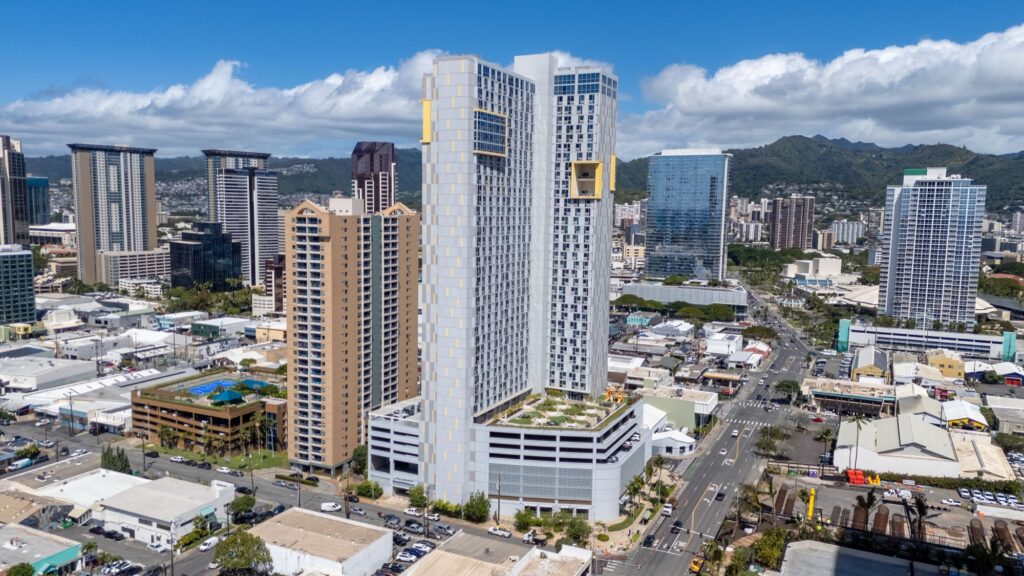
Oʻahu’s for-sale affordable housing runs under two legally distinct programs — HCDA reserved housing (with district-specific rules in Kakaʻako and Kalaeloa) and HHFDC-regulated projects (including projects in Kakaʻako) — plus a City & County variant used at Keʻolu at Koa Ridge. They have different income tables, different resale restrictions, and very different rules about what you owe when you sell. Buyers, and plenty of articles, conflate them. This guide keeps them separate, because the programs do.
Last verified: August 14, 2026. Program rules cited to each agency’s current published materials.
HCDA, HHFDC, and City programs at a glance
- HCDA (Hawaiʻi Community Development Authority) runs reserved housing in the Kakaʻako district — including Ward Village reserved-housing offerings. The Kakaʻako rules summarized here are HAR Chapter 15-218. Income 80%–140% AMI on HCDA’s own 2026 table. Regulated Term of generally 2, 5, or 10 years with an HCDA buyback option, plus a shared-equity payment that never expires (HCDA Reserved Housing FAQ, dbedt.hawaii.gov/hcda, accessed Aug 14, 2026).
- HHFDC (Hawaiʻi Housing Finance & Development Corporation) is the state agency regulating affordable units in projects like Kuilei Place (Mōʻiliʻili). Income up to 140% AMI on HHFDC’s 2026 county table (higher dollar caps than HCDA’s at the same percentage). 10-year buyback program plus a Shared Appreciation Equity (SAE) program (HHFDC Kuilei Place project page, dbedt.hawaii.gov/hhfdc, accessed Aug 14, 2026).
- City & County variant (Keʻolu at Koa Ridge): ≤120% AMI on the City’s table, 10-year owner-occupancy, City right of first refusal — and no shared-appreciation payback (castlecookehawaii.com Keʻolu program pages, accessed Aug 14, 2026).
- The income caps differ at the same percentage. 120% AMI for a 4-person household in 2026: $160,100 (HCDA) vs $184,800 (HHFDC/City) — see the separate tables below. Never apply one program’s numbers to the other.
HCDA also oversees reserved housing in Kalaeloa, including Kaʻulu. The Kakaʻako rules below should not be applied automatically to Kalaeloa. Check the district rules and the project’s offering packet. A Kakaʻako address alone does not identify the housing program: Kahuina uses HHFDC.
HCDA reserved housing (Kakaʻako): who qualifies and how it works
HCDA’s Reserved Housing program is for Hawaiʻi residents earning between 80% and 140% of the area median income, buying below-market homes inside the Kakaʻako community development district (HCDA Reserved Housing program page, dbedt.hawaii.gov/hcda/reserved-housing/, accessed Aug 14, 2026). At least 20% of new residential units in the district must be set aside for these households — that one rule is why Ward Village towers like Ulana exist.
Eligibility (per HAR Ch. 15-218 and HCDA offering packets):
- Hawaiʻi resident, at least 18 years old
- Household income within 80%–140% AMI on HCDA’s current table — for a 4-person household in 2026, between roughly $123,200 (80%) and $186,750 (140%), per HCDA’s 2026 Reserved Housing Income Limits (posted June 2026)
- Must intend to owner-occupy — investment purchases are not allowed
- Must not hold a majority interest in another residence (3-year lookback), and must not have previously purchased a reserved/workforce unit
- Assets within HCDA’s published asset limits (HCDA 2026 AMI Asset Limits, same page)
How units are offered: per-project application windows (typically 30–60 days, announced via the project microsite, HCDA’s newsroom, and Star-Advertiser legal ads), followed by a public lottery. Precedent: Ulana Ward Village’s window ran January 3 – February 13, 2022, with the lottery on March 1, 2022.
2026 HCDA income limits (HCDA 2026 Reserved Housing Income Limits, dbedt.hawaii.gov/hcda/annual-ami-stats/, posted June 2026 — based on HUD FY2026, effective May 1, 2026; keep this table separate from the HHFDC table below):
| Household size | 80% AMI | 100% AMI | 120% AMI | 140% AMI |
|---|---|---|---|---|
| 1 person | $86,250 | $93,400 | $112,050 | $130,700 |
| 2 persons | $98,600 | $106,700 | $128,100 | $149,400 |
| 3 persons | $110,900 | $120,050 | $144,100 | $168,100 |
| 4 persons | $123,200 | $133,400 | $160,100 | $186,750 |
| 5 persons | $133,100 | $144,050 | $172,900 | $201,700 |
| 6 persons | $142,950 | $154,750 | $185,700 | $216,650 |
What happens when you sell — the shared-equity payback, plainly
Two separate mechanisms apply to an HCDA reserved unit, and the second one never goes away (HCDA Reserved Housing FAQ, accessed Aug 14, 2026):
- The Regulated Term and buyback. Your deed carries a Regulated Term — generally 2, 5, or 10 years, stated in your Unit Deed/Unilateral Declaration, starting when the deed records. During that term you must owner-occupy and you cannot sell on the open market: HCDA has the first option to buy the unit back at a formula price that is not negotiable. If HCDA waives its buyback, you may sell at market (and the occupancy requirement lifts).
- Shared equity — due whenever you sell, even decades later. In HCDA’s own words, “the Shared Equity payment requirement never expires.” For units under the 2018 rules, the payment is a fixed percentage of your resale fair market value: (original FMV − original price) ÷ original FMV, rounded to the nearest 1%. Example: if your unit appraised at $700,000 and you paid $560,000, your discount was 20% — so at resale you owe HCDA 20% of the then-current market value. (Units under the older 2005/2011 rules owe the higher of the fixed discount amount or a proportional formula — check your Unilateral Declaration.) No shared equity is owed if the discount percentage was under 0.5% or the unit resells below your original price. Prepayment is now allowed under a recent rule amendment.
Adding or removing anyone from title — including for marriage or divorce — triggers a release from the program and the shared-equity payment. Refinancing and HELOCs require HCDA approval at any time, even after the Regulated Term.
The plain-language takeaway: an HCDA unit gives you a below-market entry price, and HCDA permanently keeps a percentage share of the home’s value in exchange. You keep 100% of your mortgage paydown and your share of appreciation — but not the share attributable to the original discount.
HHFDC-regulated projects: who qualifies and how it works
HHFDC is the state’s housing finance agency; developers who use its programs (Chapter 201H) must sell a share of units to qualified residents under HHFDC’s eligibility, buyback, and shared-appreciation rules. The current flagship example is Kuilei Place in Mōʻiliʻili: 603 of its 1,005 units — 60% — are affordable units for households at or below 140% AMI, sold subject to HHFDC’s Use, Sale and Transfer (Buyback) and Shared Appreciation Equity (SAE) programs (HHFDC Kuilei Place project page, dbedt.hawaii.gov/hhfdc, accessed Aug 14, 2026).
Eligibility (typical HHFDC offering, per the Kuilei Place program materials):
- U.S. citizen or permanent resident, at least 18 years old, Hawaiʻi resident
- Household income at or below the project’s AMI cap on HHFDC’s current county table (140% for Kuilei Place)
- Owner-occupant intent; no majority interest in other residential property (project-specific lookbacks apply — see each offering packet)
2026 HHFDC income limits, Honolulu County (2026 HHFDC Honolulu County Income Limits & Sales Price Guidelines, dbedt.hawaii.gov/hhfdc, posted June 23, 2026 — based on HUD FY2026 very-low-income levels, HUD FY2026 effective May 1, 2026; separate table from HCDA’s above by design):
| Household size | 80% AMI | 100% AMI | 120% AMI | 140% AMI |
|---|---|---|---|---|
| 1 person | $86,240 | $107,800 | $129,360 | $150,920 |
| 2 persons | $98,560 | $123,200 | $147,840 | $172,480 |
| 3 persons | $110,880 | $138,600 | $166,320 | $194,040 |
| 4 persons | $123,200 | $154,000 | $184,800 | $215,600 |
| 5 persons | $133,120 | $166,400 | $199,680 | $232,960 |
| 6 persons | $142,960 | $178,700 | $214,440 | $250,180 |
Note the caps are higher in dollars than HCDA’s at the same percentage — HHFDC builds its table from HUD’s high-housing-cost-adjusted 50% limits rather than the raw median. Full explanation on our income limits page.
What happens when you sell (HHFDC regime, Kuilei Place terms): the units carry a 10-year buyback period — sell within it and HHFDC has the first right to repurchase at a formula price set per the project declaration. Separately, the SAE program entitles HHFDC to a share of appreciation tied to the discount you received at purchase, payable when you sell on the market. Unlike HCDA’s regime, the specifics are set per-project under Chapter 201H — read the declaration attached to the unit.
Keʻolu at Koa Ridge — the City & County variant
Keʻolu is affordable housing under the City & County of Honolulu’s program, not HHFDC’s — and its resale rules are materially friendlier. Per Castle & Cooke’s published Keʻolu program terms (castlecookehawaii.com, accessed Aug 14, 2026):
- Income at or below 120% AMI on the City’s table — $184,800 for a 4-person household in 2026 (City DHLM income guidelines, honolulu.gov/dhlm, FY2026; the City’s figures match HHFDC’s table at each percentage)
- 10-year owner-occupancy requirement — you must live in the unit; renting it out is not allowed
- The City holds a right of first refusal on any resale during the 10-year term
- No shared-appreciation equity — after the 10-year term you sell with no payback to the City
That last line is the sharpest contrast on this page: sell a Keʻolu townhome in year 11 and you keep all the appreciation; sell an HCDA reserved unit in year 11 and you still owe HCDA its fixed percentage of market value; sell a Kuilei Place affordable unit and SAE applies per your declaration.
Side-by-side: the rules, not the marketing
Program rules compared. Income dollar figures intentionally stay in the separate per-program tables above — the schedules are not interchangeable.
| HCDA reserved housing | HHFDC-regulated (e.g., Kuilei Place) | City & County (Keʻolu) | |
|---|---|---|---|
| Where it applies | Kakaʻako reserved housing summarized here; Kalaeloa has separate district rules | Statewide, project-by-project under Ch. 201H | Projects under City affordable agreements |
| Legal basis | HAR Ch. 15-218 | HRS Ch. 201H + project declarations | City agreement / DHLM program |
| Income eligibility | 80%–140% AMI, HCDA table | Project cap (Kuilei: ≤140% AMI), HHFDC table | ≤120% AMI, City table (matches HHFDC figures) |
| 2026 cap, 4-person @120% | $160,100 | $184,800 | $184,800 |
| Occupancy requirement | Owner-occupancy during Regulated Term (2, 5, or 10 yrs per deed) | Owner-occupancy during 10-yr buyback period | 10-yr owner-occupancy |
| Resale during the term | HCDA buyback option at formula price (not negotiable) | HHFDC first right to repurchase at formula price | City right of first refusal |
| Equity payback at sale | Yes — shared equity, never expires (fixed % of resale FMV) | Yes — Shared Appreciation Equity per declaration | No shared appreciation |
| Rent it out? | No, during Regulated Term (unless HCDA waives buyback) | No, during restriction period | No, during 10-yr term |
| Current example projects | Ulana (delivered, sold out); Mahana (expected) | Kuilei Place | Keʻolu at Koa Ridge |
Which projects use which program right now?
As of August 14, 2026:
| Project | Program | Status |
|---|---|---|
| Ulana Ward Village | HCDA | Sold out; delivered Nov 2025; buyback program active — restricted resales may surface |
| Mahana Ward Village | HCDA (expected) | Reserved-housing offering anticipated late 2026 — not yet announced; HCDA holds an informational update on Kakaʻako affordable-housing opportunities Aug 26, 2026 |
| Kahuina (Lamaku + Mamalu) | HHFDC | Developer publishes HHFDC application instructions; confirm current inventory and selection terms |
| Kuilei Place | HHFDC | 603 affordable units; initial offerings began Feb 2023; completion scheduled for 2027 per HHFDC; confirm the contract schedule |
| Keʻolu at Koa Ridge | City & County | Phase I lottery held Jul 11, 2025; future phases expected roughly annually |
| Hoʻopili affordable phases | City agreement (≤120% AMI, D.R. Horton lotteries) | Per-phase — see the lottery calendar |
Program classifications for Kahuina and Kuilei, and Kuilei’s published completion year, were checked October 1, 2026. Other status entries retain their August 14, 2026 context; confirm current availability before applying.
How to actually apply
The process is program-specific, but the shape is the same: watch for the window, prepare your file before it opens, apply, then wait for the lottery.
- Confirm your numbers now — household size, gross household income, and which table applies: 2026 income limits.
- Get pre-qualified early. Every program requires a lender pre-qualification letter with your application — not after.
- Watch the windows. HCDA offerings publish via project microsites, HCDA’s newsroom, and Star-Advertiser legal ads; HHFDC and City projects publish via the developer’s sales program. Our lottery calendar tracks open and expected windows.
- Apply completely. Missing documents disqualify more applicants than income does — see how to qualify for the standard document checklist.
- Understand what you’re signing. The deed restrictions above (buyback, occupancy, shared equity) are permanent legal instruments. Read the declaration; ask before you sign, not at resale.
Full walkthrough: How Hawaiʻi affordable-housing lotteries work and the 2026 lottery guide.
Income limits reset every spring, and application windows open with little notice. If you want to know when the new AMI tables drop or when a project you’d qualify for opens applications, text Team Wong at (808) 427-9572 — tell us your household size and rough income, and we’ll tell you which programs you fit and what’s coming up.
Frequently asked questions
What are the HHFDC requirements?
For a for-sale HHFDC affordable unit you generally must be a U.S. citizen or permanent resident, at least 18, a Hawaiʻi resident, an owner-occupant, and have household income at or below the project’s AMI cap on HHFDC’s current county table (up to 140% AMI — $215,600 for a 4-person household in 2026, per HHFDC’s Honolulu County schedule posted June 23, 2026). Units carry a buyback period (10 years at Kuilei Place) and Shared Appreciation Equity obligations per the project’s declaration. Each offering packet states the exact project-specific rules.
How do affordable housing lotteries work?
You apply during an announced window with a complete application and lender pre-qualification letter; after the window closes, a public random drawing sets the order in which applicants pick units. A lottery win is a place in line, not a guaranteed unit. Full walkthrough: our lottery guide.
Can I rent out a reserved housing unit?
No — not during the restriction period, in any of the three programs. HCDA requires owner-occupancy for the full Regulated Term (unless HCDA waives its buyback on a sale); HHFDC-regime and Keʻolu units require owner-occupancy through their 10-year terms (HCDA Reserved Housing FAQ; Kuilei Place and Keʻolu program materials, accessed Aug 14, 2026).
Do I have to live in it?
Yes. All three programs require owner-occupancy during the restriction period — that is the core of the bargain for the below-market price. Moving out without selling (or renting it out) breaches the deed restriction.
Where can I find affordable housing for sale in Kakaʻako?
Kakaʻako has more than one affordable-housing program. Ward Village reserved-housing offerings use HCDA, while Kahuina uses HHFDC. Check each developer’s current application packet and inventory; a project’s location does not establish its program or an open lottery.
Is Kuilei Place HCDA or HHFDC?
HHFDC. Kuilei Place is in Mōʻiliʻili — outside the Kakaʻako district — and its 603 affordable units are regulated by HHFDC (140% AMI and below, HHFDC buyback + SAE programs). HCDA has no role there. Conversely, Ward Village reserved housing is HCDA, not HHFDC.
Which program is “better”?
Keʻolu’s City variant has the friendliest exit (no shared appreciation), HCDA has the widest income band (80–140% on its table), and HHFDC’s table has the highest dollar caps at each percentage. The honest answer: you don’t pick the program, you pick the home — and then you make sure you understand that program’s resale math before signing. The comparison table above is the 60-second version.
How do I buy an affordable housing unit on Oʻahu, and which realtor can guide me through it?
You buy through the program’s own application-and-lottery process — no realtor can skip that line — but an agent who knows these programs keeps you from losing your spot on paperwork. The steps: verify your income against the correct table, get pre-qualified, apply during the window, and if drawn, move fast on unit selection and program documents (buyback, occupancy, and equity declarations).
Which real estate agent understands HHFDC affordable housing programs on Oʻahu? Team Wong at New Construction Hawaii works these programs as a core practice — HCDA reserved-housing offerings in Kakaʻako, HHFDC projects like Kuilei Place, and the Keʻolu/City program at Koa Ridge. At most Oʻahu new-construction projects the builder compensates the buyer’s agent — each builder sets its own policy per project, and we confirm it with you before your first visit. We’ll tell you plainly which program you fit, what the resale restrictions really mean, and when the next window opens. How we work → · Contact us
Sources
- HCDA Reserved Housing program page + Reserved Housing FAQ — dbedt.hawaii.gov/hcda/reserved-housing/ and /hcda/reserved-housing-frequently-asked-questions/ (accessed Aug 14, 2026)
- HAR Chapter 15-218, Kakaʻako Reserved Housing Rules (executed rules PDF) — dbedt.hawaii.gov/hcda
- HCDA 2026 Reserved Housing Income Limits (posted June 2026) — dbedt.hawaii.gov/hcda/annual-ami-stats/
- HHFDC Kuilei Place project page + 2026 Honolulu County Income Limits & Sales Price Guidelines (posted June 23, 2026) — dbedt.hawaii.gov/hhfdc
- HUD FY2026 Income Limits (released and effective May 1, 2026) — huduser.gov/portal/datasets/il.html
- Castle & Cooke Keʻolu program pages — castlecookehawaii.com (accessed Aug 14, 2026)
- City & County of Honolulu DHLM Income Guidelines (FY2026) — honolulu.gov/dhlm/income-guidelines/
Related: Affordable Housing on Oʻahu · 2026 Income Limits · How to Qualify · Lottery Calendar · Lottery Guide · Affordable Developments · Ulana · Kuilei Place · Keʻolu at Koa Ridge · Kahuina · First-Time Buyer Guide
October 1, 2026 correction: Program classifications and related explanations reviewed. Other prices and release dates retain their stated dates. Sources: Kuilei, Kahuina, Kaulu.
Your next step
Make sense of your options.
Have a question about a community or a floor plan? Team Wong can help you work through the details.
Ask Team Wong